Introduction: The Hidden Administrative Toll of Paper-Based Accounting
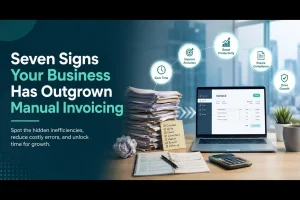
For decades, administrative operations across Pakistani businesses have relied on physical paperwork, paper-based invoices, physical ledger books, and manual data transcription. While these traditional methods served early-stage commercial environments, they have become a severe operational bottleneck in the modern digital economy.
Driven by the Federal Board of Revenue’s (FBR) mandate for real-time electronic invoicing and tax reporting, organizations entangled in paper-based workflows face mounting friction, excessive overhead, and chronic administrative delays.
Recent productivity audits indicate that mid-sized enterprises and growing small-and-medium enterprises (SMEs) waste upwards of hours annually purely on manual billing reconciliation, paper archiving, data re-entry, and error correction.
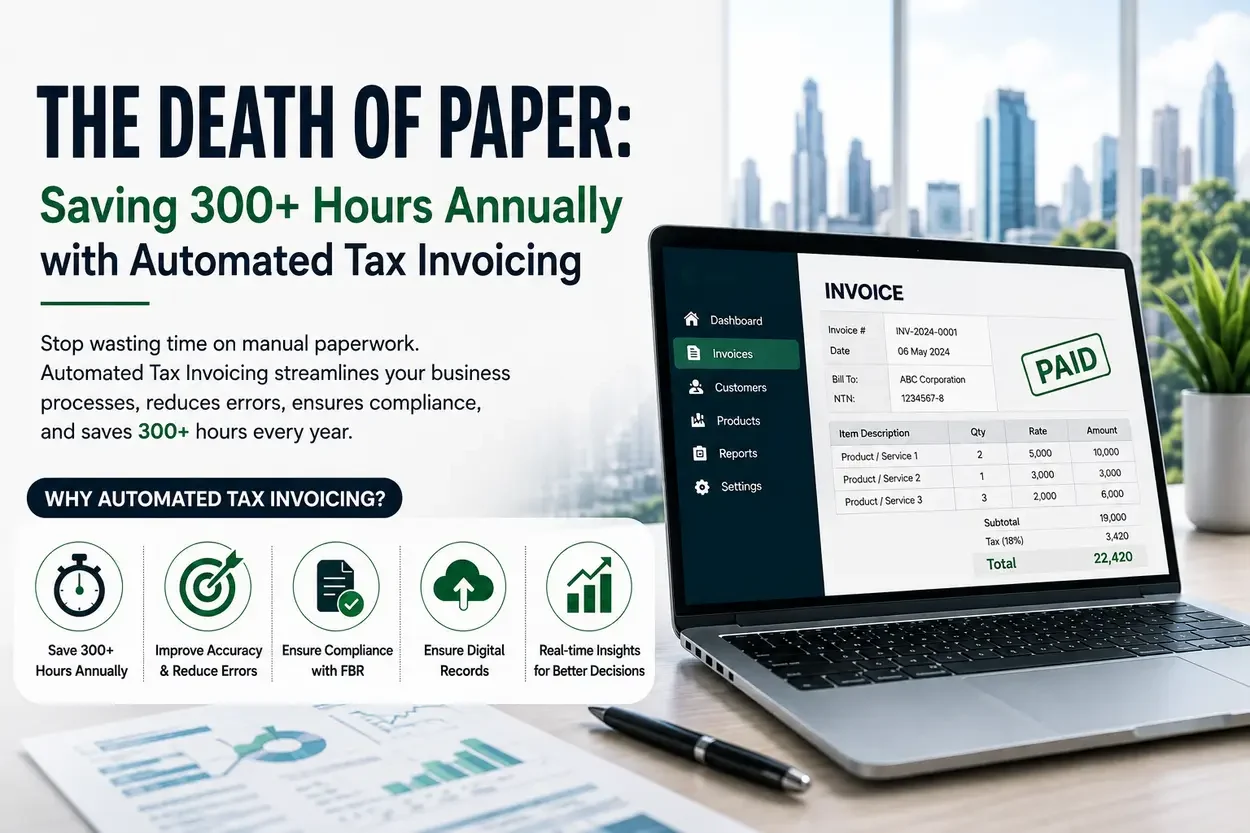
Transitioning to an automated digital invoicing ecosystem does more than satisfy government compliance mandates – it liberates valuable human capital, eliminates operational bottlenecks, and accelerates cash flow. This article explores the hidden costs of paper-based accounting, the operational transformation driven by paperless workflows, and how DigiTex by NatureTech enables businesses to reclaim hundreds of productive hours every year.
The True Cost of Manual Billing and Paper Record-Keeping
The reliance on physical invoices and disconnected spreadsheets creates a cascade of inefficiencies throughout an organization. When sales teams, cashiers, and accountants manually record transactions or transpose data from point-of-sale terminals into accounting ledgers, the margin for human error widens exponentially.
A single misplaced decimal point or transposed digit can cause severe sales tax discrepancies, triggering protracted audits and administrative disputes with tax authorities.
Furthermore, physical document storage requires dedicated physical space, rigorous filing protocols, and hours of labor retrieving historical records during tax audits. If a paper receipt is damaged, misplaced, or destroyed, the business faces immediate compliance vulnerabilities and potential fines under FBR regulations.
Beyond the direct risk of penalties, manual processing introduces debilitating latency. While digital markets operate in milliseconds, paper-based billing requires days or weeks to reconcile monthly sales summaries, delaying financial reporting and executive decision-making.
Common FBR Sales Tax Filing Errors and How to Avoid Them
Comparative Evaluation: Paper-Based Accounting vs. Automated Cloud Invoicing
The table below contrasts the operational realities of traditional paper-based accounting with an automated digital invoicing environment powered by enterprise middleware.
| Operational Dimension | Traditional Paper-Based Accounting | Automated Digital Invoicing (DigiTex) |
|---|---|---|
| Transaction Processing | Manual data entry, physical receipt printing, and manual ledger transcription. | Instantaneous, automated invoice generation and real-time FBR validation. |
| Annual Time Expenditure | + hours spent on data re-entry, error reconciliation, and paper filing. | Near-zero manual intervention; automated synchronization across ERPs and FBR portals. |
| Error Rate & Audit Risk | High susceptibility to transposition errors, missing documentation, and tax mismatches. | % rules-based accuracy with immutable, searchable digital audit trails. |
| Workspace & Storage | Physical filing cabinets, storage rental costs, and vulnerability to physical damage. | Secure, cloud-native architecture with encrypted backups and instant retrieval. |
By eliminating the manual burden of paper archiving and ledger reconciliation, organizations redirect hundreds of annual work hours toward core business growth, customer service, and strategic financial planning.
“Manual invoicing is inherently time-consuming and error-prone. By replacing paper archives with automated cloud workflows, businesses eliminate administrative friction and protect their working capital from avoidable penalties.” — NatureTech Operations Strategy Team
Transforming Productivity Through DigiTex Integration
Achieving a paperless office requires more than simply scanning paper invoices into PDF files; it demands end-to-end workflow automation that connects commercial billing directly with government tax portals. DigiTex, developed by NatureTech as an officially licensed FBR integration partner, provides the robust middleware necessary to achieve total digital transformation.
Key Productivity Drivers of Automated Invoicing
- Instantaneous ERP & POS Synchronization: Automatically captures sales transactions from existing point-of-sale terminals or enterprise resource planning systems, transmitting them to FBR servers without human touchpoints.
- Automated Error Correction & Validation: Built-in validation rules catch data discrepancies before transmission, eliminating rejected invoices and subsequent correction cycles.
- Centralized Digital Archives: Replaces physical filing rooms with secure, cloud-based repositories where historical invoices, debit notes, and tax receipts can be searched and retrieved in seconds.
Conclusion and Strategic Implementation
The transition from paper-based accounting to automated digital invoicing is no longer a futuristic concept – it is an urgent operational necessity. Organizations that cling to manual billing workflows handicap their productivity, expose themselves to heavy compliance penalties, and lag behind agile competitors.
By partnering with an officially licensed integrator and implementing DigiTex by NatureTech, business leaders can permanently close the chapter on paper-based inefficiencies, recover + hours of annual productivity, and secure absolute regulatory compliance in Pakistan’s digital economy.
FAQs
How quickly can a business transition from paper-based to automated invoicing?
Timelines vary by organization size and existing ERP/POS infrastructure, but licensed integration partners typically design onboarding to minimize disruption to daily operations.
Does automated invoicing eliminate the need for any physical record-keeping?
Automated systems significantly reduce reliance on physical storage by maintaining searchable digital audit trails, though businesses should confirm specific FBR record-retention requirements for their sector.
Is automated digital invoicing only useful for large enterprises?
No. Small-and-medium enterprises (SMEs) are highlighted as among the biggest beneficiaries, since manual reconciliation work disproportionately consumes their limited administrative capacity.