Introduction
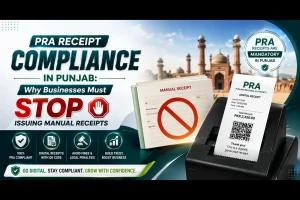
Businesses across Punjab are moving toward greater digital transparency in sales-tax reporting. For restaurants, cafés, hotels, beauty salons, caterers, and other taxable service providers, issuing transactions through approved electronic invoicing and monitoring systems is becoming increasingly important.
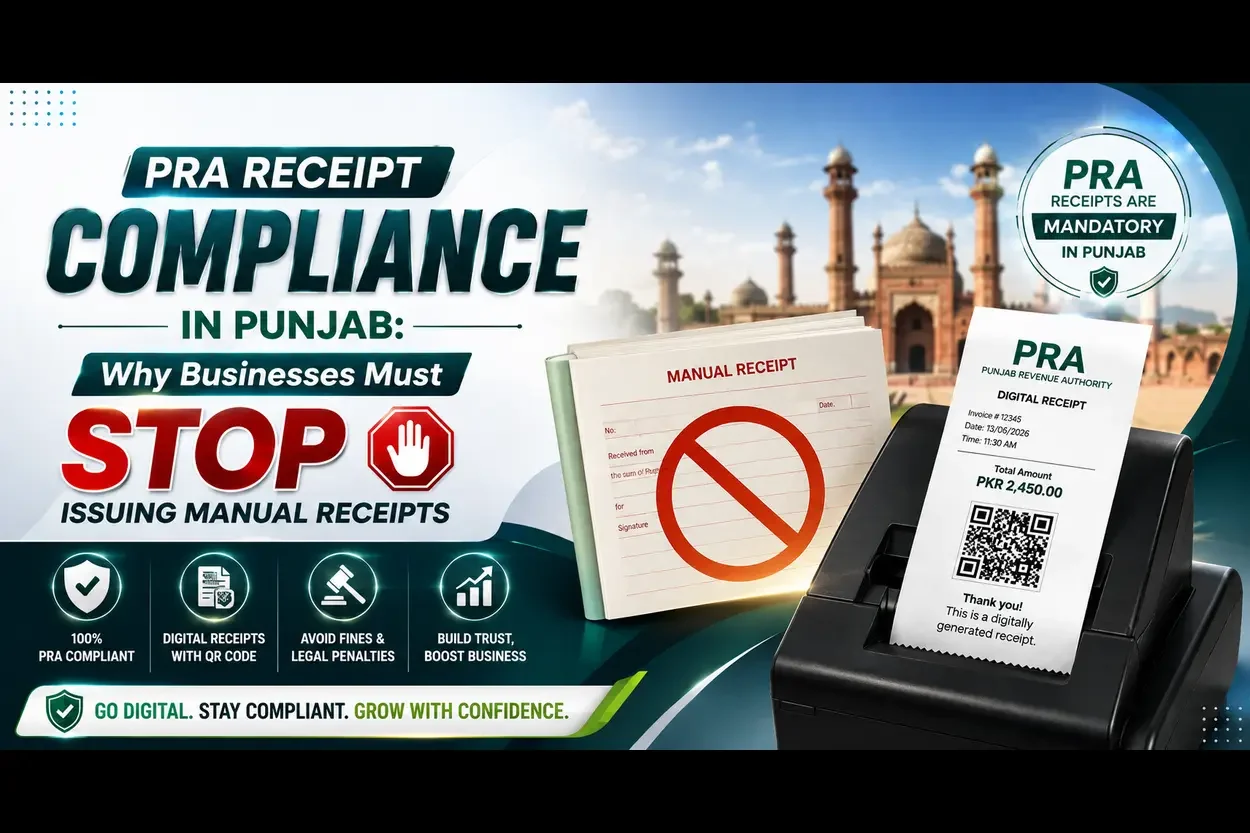
Manual receipts may appear convenient, but they can create serious compliance, reporting, and record-keeping risks. As the Punjab Revenue Authority strengthens its electronic monitoring processes, businesses should treat digital invoicing not merely as an administrative preference, but as an essential part of responsible tax compliance.
What Is PRA Receipt Compliance?
The Punjab Revenue Authority, or PRA, administers sales tax on services in Punjab. Businesses providing taxable services may be required to register with the authority, charge the applicable sales tax, issue compliant invoices or receipts, maintain transaction records, and report their taxable activity through the prescribed systems.
PRA compliance is therefore broader than simply collecting tax from customers. It also involves ensuring that each eligible transaction is properly recorded and can be reconciled with the business’s sales records, tax returns, and electronic reporting obligations.
The PRA provides taxpayer registration, return-filing, invoice-management, and verification services through its online platforms. Businesses should consult the latest notifications, rules, and applicable sector-specific instructions before selecting or configuring an invoicing system.
How to Register a Business with the Punjab Revenue Authority
Why Manual Receipts Are Becoming a Problem
A handwritten or manually generated receipt does not automatically provide the level of traceability expected in a modern tax-reporting environment. Manual records can be lost, altered, duplicated, or omitted from the business’s official sales data. They also make it more difficult to verify whether the correct tax was charged and deposited.
For businesses operating high-volume outlets, these weaknesses can become particularly significant. A restaurant may process hundreds of orders in a single day. If some transactions are recorded electronically while others are written manually, the business may struggle to maintain a complete and accurate audit trail.
Electronic invoicing systems help reduce these risks by assigning transaction identifiers, preserving invoice details, and creating a consistent record of sales. Research on electronic invoice-monitoring systems in Punjab has also found that digital monitoring can improve the reporting of sales tax and taxable sales.
The Main Risks of Continuing With Manual Receipts
| Risk | How It Can Affect a Business |
|---|---|
| Incomplete sales records | Transactions may not be reflected in internal accounts or tax returns. |
| Inconsistent tax calculations | Staff may apply incorrect rates or calculate tax inaccurately. |
| Weak audit trail | Manual documents may be difficult to verify during an inspection or audit. |
| Duplicate or missing receipts | Businesses may be unable to reconcile issued receipts with daily sales. |
| Data-entry errors | Amounts, dates, service descriptions, and tax details may be recorded incorrectly. |
| Reputational damage | Customers may view non-compliant or unclear receipts as a sign of poor business controls. |
The practical concern is not only the paper receipt itself. The greater issue is whether the transaction is captured in the prescribed electronic system and accurately reflected in the business’s books and tax reporting.
Which Businesses Should Pay Particular Attention?
Businesses that provide taxable services in Punjab should assess their PRA obligations carefully. This includes, depending on the applicable classification and current rules, restaurants, cafés, hotels, event venues, caterers, beauty and personal-care businesses, clubs, property-related service providers, and other service-sector enterprises.
The exact obligations may vary according to the nature of the service, registration status, turnover, location, applicable exemptions, and any sector-specific notification. A business should not assume that it is exempt merely because it is small, uses a basic cash register, or has historically issued manual receipts.
What an Electronic Receipt System Should Do
An electronic invoicing or point-of-sale system should be selected on the basis of compliance capability rather than appearance or price alone. At a minimum, the system should support accurate recording of sales, tax calculations, invoice numbering, transaction history, customer-facing receipts, and reliable reporting.
Businesses should also confirm whether their chosen system is compatible with the PRA’s current electronic invoicing or invoice-monitoring requirements. Where integration or approval is required, the business should complete the relevant process before relying on the system for routine operations.
A suitable system should help the business maintain the following information:
| Record | Purpose |
|---|---|
| Invoice or receipt number | Provides a traceable identifier for each transaction. |
| Date and time of sale | Supports reconciliation and reporting. |
| Description of service | Shows what was supplied to the customer. |
| Amount before tax | Separates the service value from the tax component. |
| Sales-tax amount | Demonstrates the tax charged to the customer. |
| Total amount paid | Confirms the final transaction value. |
| Payment method | Helps reconcile cash, card, bank, and digital payments. |
| Cancellation or refund history | Creates an auditable record of adjustments. |
Manual Receipts Should Not Be Used as a Parallel System
Businesses sometimes introduce electronic invoicing while continuing to issue manual receipts whenever the system is inconvenient. This approach can undermine the purpose of digital compliance. If both systems operate at the same time without strict controls, management may not know which record represents the complete sales position.
If a system failure occurs, the business should follow a documented contingency procedure. Any temporary manual record should be numbered, controlled, entered into the electronic system when service is restored, and reconciled with the day’s sales. Staff should not be permitted to use manual receipts simply to avoid recording a transaction electronically.
How Businesses Can Prepare for PRA Compliance
The transition to electronic receipt issuance should begin with a review of the business’s current operations. Management should identify every point at which a sale is made, including dine-in counters, takeaway desks, delivery orders, hotel front desks, event bookings, and mobile or temporary locations.
The business should then confirm its PRA registration status, review the applicable service classification, and check the latest official instructions. It should select an appropriate invoicing or POS solution, configure tax rates correctly, and test the system before implementation.
Employees must also be trained. A compliant system will not prevent problems if staff cancel invoices incorrectly, fail to record discounts, issue duplicate receipts, or continue using unofficial handwritten documents. Daily reconciliation between the POS system, cash drawer, card settlements, bank receipts, and accounting records is especially important.
A Practical Compliance Checklist
Before moving fully away from manual receipts, a business should be able to answer “yes” to the following questions:
- Is the business registered with PRA where registration is required?
- Has the business confirmed that its services are correctly classified for sales-tax purposes?
- Is the invoicing or POS system configured with the correct tax treatment?
- Are transactions recorded at the time of sale?
- Can the system produce a clear customer receipt or invoice?
- Are refunds, cancellations, discounts, and complimentary items properly documented?
- Are electronic records backed up and protected from unauthorized changes?
- Are daily sales reconciled with cash, card, bank, and delivery-platform records?
- Do employees understand when manual contingency procedures may be used?
- Has management reviewed the latest PRA notifications and guidance?
Digital Compliance Is Also Good Business Practice
Electronic receipt issuance is not only about avoiding penalties. It can improve business operations by giving owners better visibility into daily revenue, peak sales periods, product or service performance, refunds, discounts, and staff activity.
Accurate digital records can also simplify bookkeeping, support financial planning, reduce disputes with customers, and make it easier to respond to an audit or information request. In this sense, PRA compliance and business efficiency often reinforce each other.
Final Thoughts
The continued use of manual receipts exposes businesses to avoidable weaknesses in sales recording, tax calculation, and audit preparation. Restaurants, cafés, hotels, and other taxable service providers should move toward approved electronic invoicing and ensure that their systems, staff, and accounting records operate consistently.
The safest approach is to review the business’s current PRA obligations, adopt a reliable electronic receipt process, document contingency procedures, and monitor the latest official requirements. Businesses that act early will be better positioned to maintain accurate records, demonstrate transparency, and avoid disruption as digital tax administration becomes more widespread in Punjab.
Important: The specific registration, invoicing, integration, and record-keeping obligations may differ by business type and may change through new notifications. Always verify the current position directly with the Punjab Revenue Authority or a qualified tax professional.
FAQs
Can a business use manual receipts at all under PRA rules?
The article notes that manual records may only be appropriate as a documented contingency procedure during a system failure — numbered, controlled, and entered into the electronic system once service is restored — rather than as a routine parallel option.
Which types of businesses are most affected by PRA receipt compliance?
Restaurants, cafés, hotels, event venues, caterers, beauty and personal-care businesses, clubs, and other property-related or service-sector enterprises should assess their obligations, though exact requirements vary by classification and turnover.
Does an electronic receipt system only help with compliance?
No. The article highlights that accurate digital records also improve visibility into revenue, peak sales periods, refunds, and staff activity, and can simplify bookkeeping and audit response.