FBR Digital Invoicing for Importers in Pakistan
The Federal Board of Revenue (FBR) has accelerated Pakistan’s transition toward a fully documented economy by implementing Digital Invoicing. Importers are among the businesses required to comply with these regulations by integrating their invoicing systems with FBR and reporting invoices electronically in real time.
If your business imports goods into Pakistan, understanding and implementing FBR Digital Invoicing is no longer optional—it is a critical compliance requirement. Failure to comply can lead to financial penalties, increased audits, and other enforcement actions.
This guide explains everything importers need to know about FBR Digital Invoicing, including its purpose, benefits, compliance process, penalties, and how NatureTech can help you achieve seamless integration.
What is FBR Digital Invoicing?
FBR Digital Invoicing is an electronic invoicing system that enables registered businesses to issue invoices digitally and transmit invoice data directly to FBR through secure APIs.
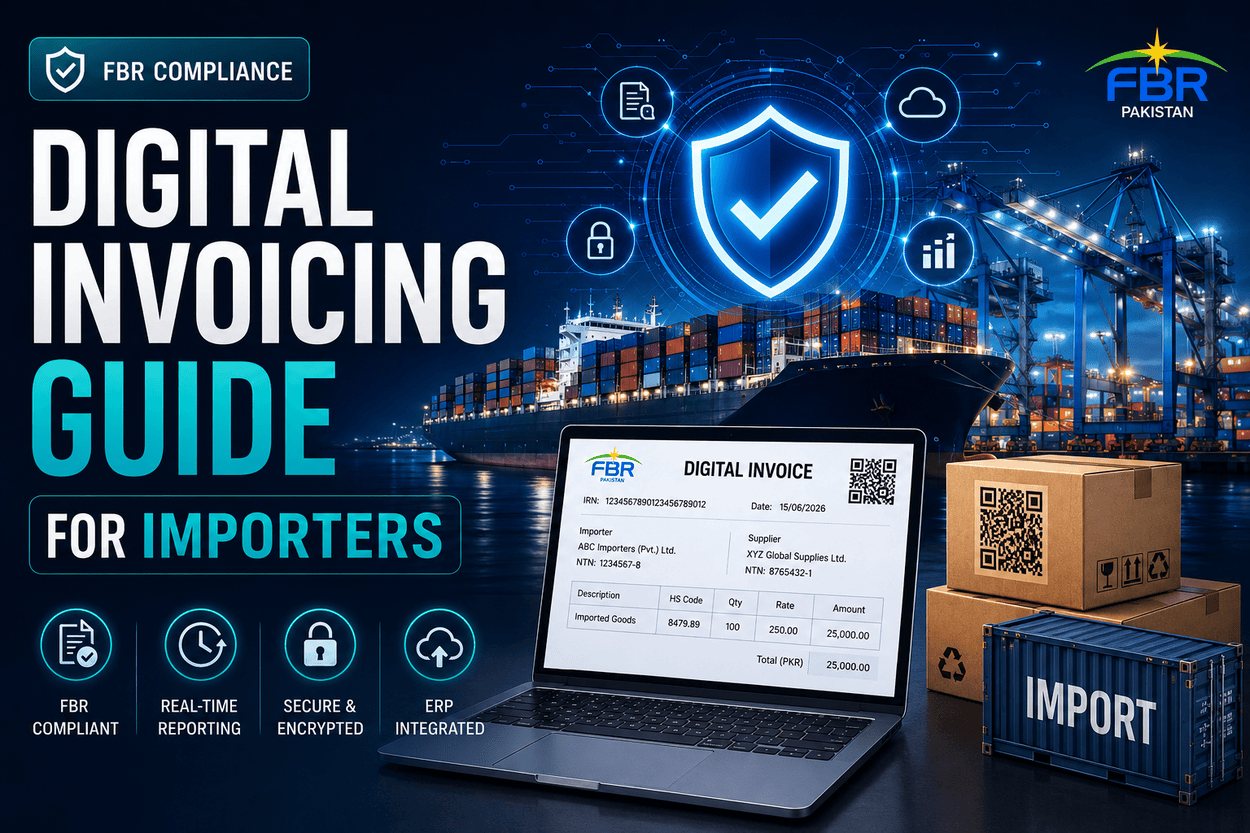
Instead of maintaining invoices solely within accounting software or ERP systems, businesses submit invoice details to FBR in real time. Once validated, FBR returns a unique Invoice Reference Number (IRN), confirming that the invoice has been successfully registered.
This system improves tax transparency, minimizes fraudulent invoicing, and enables more efficient tax administration.
Why Has FBR Introduced Digital Invoicing?
The Government of Pakistan introduced Digital Invoicing to modernize the country’s tax infrastructure and strengthen compliance.
The primary objectives include:
- Real-time reporting of business transactions
- Improved tax transparency
- Reduction of fake and duplicate invoices
- Better documentation of economic activity
- Increased tax collection efficiency
- Faster tax audits
- Simplified compliance for businesses
- Digital transformation of Pakistan’s taxation system
Is Digital Invoicing Mandatory for Importers?
Yes.
Importers that fall under FBR notifications are required to integrate their invoicing systems with FBR’s Digital Invoicing platform.
Whether you use an ERP system, POS software, or accounting software, your system must be capable of communicating with FBR through approved APIs.
Failure to comply may result in penalties and regulatory action.
Who Must Comply?
Digital Invoicing requirements currently apply to notified categories of businesses, including:
- Importers
- Manufacturers
- Large Taxpayers
- Public Companies
- Corporate Businesses
- Sales Tax Registered Businesses notified by FBR
As FBR expands implementation, additional sectors may also become subject to Digital Invoicing requirements.
How Does FBR Digital Invoicing Work?
The process is straightforward but requires proper technical integration.
Step 1 – Invoice Creation
The importer creates an invoice in their ERP, POS, or accounting software.
Step 2 – API Transmission
The software securely sends invoice data to FBR through Digital Invoicing APIs.
Step 3 – Validation
FBR validates the invoice against prescribed business rules.
Step 4 – Invoice Registration
After successful validation, FBR issues an Invoice Reference Number (IRN) and any required verification details.
Step 5 – Invoice Delivery
The validated invoice is shared with the customer and retained in the business records for future reference.
Benefits of Digital Invoicing for Importers
Although compliance is mandatory, Digital Invoicing also provides significant business benefits.
Improved Compliance
Automatic invoice reporting reduces manual filing and minimizes compliance risks.
Reduced Human Errors
Automation decreases errors associated with manual invoice preparation.
Real-Time Validation
Invoices are verified instantly, reducing the likelihood of future disputes.
Better Financial Reporting
Digital records improve accounting accuracy and simplify financial reporting.
Faster Audits
Electronic records enable quicker verification during tax audits.
Enhanced Transparency
Every invoice is securely recorded, reducing opportunities for fraud.
Better Business Reputation
Compliant businesses demonstrate professionalism and build greater trust with customers and suppliers.
Documents and Systems Required
To implement Digital Invoicing, businesses generally require:
- Active Sales Tax Registration
- FBR Registration
- ERP or Accounting Software
- Stable Internet Connection
- API Integration
- Technical Support Partner
- Secure Data Infrastructure
How to Integrate with FBR Digital Invoicing
Successful implementation involves several stages.
Register with FBR
Ensure your business is registered and eligible for Digital Invoicing.
Obtain API Credentials
Receive the required credentials from FBR for secure communication.
Integrate Your Software
Configure your ERP, POS, or accounting software to communicate with FBR.
Testing
Perform testing to ensure invoices are successfully validated.
Go Live
Begin transmitting invoices in real time.
Common Challenges Faced by Importers
Many businesses encounter challenges during implementation.
These include:
- Legacy ERP systems
- Software compatibility issues
- API configuration
- Staff training
- Data synchronization
- Invoice validation errors
- Compliance monitoring
Working with an experienced integration partner can significantly reduce implementation time and operational disruptions.
FBR Enforcement Measures
FBR has announced stricter enforcement to ensure compliance with Digital Invoicing regulations.
Businesses found issuing invoices outside the approved Digital Invoicing framework may face enforcement actions, including:
- Regulatory notices
- Compliance inspections
- Tax audits
- Recovery proceedings
- Disallowance of input tax where applicable
- Financial penalties under relevant tax laws
Penalties for Non-Compliance
Failure to comply with Digital Invoicing requirements may result in significant penalties.
Possible consequences include:
- Financial penalties prescribed under applicable FBR notifications and the Sales Tax Act, 1990.
- Increased tax audits and compliance reviews.
- Rejection or invalidation of invoices that do not meet Digital Invoicing requirements.
- Delays in processing tax matters.
- Additional enforcement action for repeated non-compliance.
Importers should review the latest FBR notifications to understand the penalties applicable to their business category, as these may be updated over time.
Appeals and Dispute Resolution
If an importer disagrees with an assessment, penalty, or enforcement action, Pakistan’s tax laws provide a formal appeal process.
Typically, businesses may:
- Respond to notices issued by FBR.
- Submit supporting documentation.
- File an appeal before the appropriate tax appellate authority within the prescribed time.
- Pursue further appeals before higher appellate forums or courts where permitted by law.
Digital Invoicing disputes are handled under the legal framework of Pakistan’s tax laws rather than through commercial arbitration.
Best Practices for Importers
To ensure ongoing compliance, businesses should:
- Integrate with FBR before enforcement deadlines.
- Regularly update ERP and accounting software.
- Train finance and accounts teams.
- Maintain accurate customer and invoice records.
- Monitor API performance.
- Conduct periodic compliance reviews.
- Keep software updated according to FBR specifications.
Why Choose NatureTech?
NatureTech provides end-to-end FBR Digital Invoicing solutions for importers across Pakistan.
Our services include:
- FBR API Integration
- ERP Integration
- Accounting Software Integration
- POS Integration
- Real-Time Invoice Reporting
- Invoice Validation
- QR Code & IRN Implementation
- Testing & Deployment
- Staff Training
- Technical Support
- Compliance Monitoring
- Ongoing Maintenance
Our experienced technical team ensures a smooth implementation with minimal disruption to your business operations.
Frequently Asked Questions
Is Digital Invoicing compulsory for importers?
Importers covered by FBR notifications are required to comply with Digital Invoicing regulations.
Can my existing ERP be integrated?
Yes. Most modern ERP and accounting systems can be integrated using FBR APIs with the appropriate technical implementation.
How long does implementation take?
Implementation timelines vary depending on your software environment and business processes. A technical assessment can determine the expected duration.
What happens if my invoice is rejected?
The system returns validation errors that must be corrected before resubmitting the invoice.
Does Digital Invoicing replace my accounting software?
No. Your existing ERP or accounting software remains your primary business system. Digital Invoicing enables secure communication between your software and FBR.